
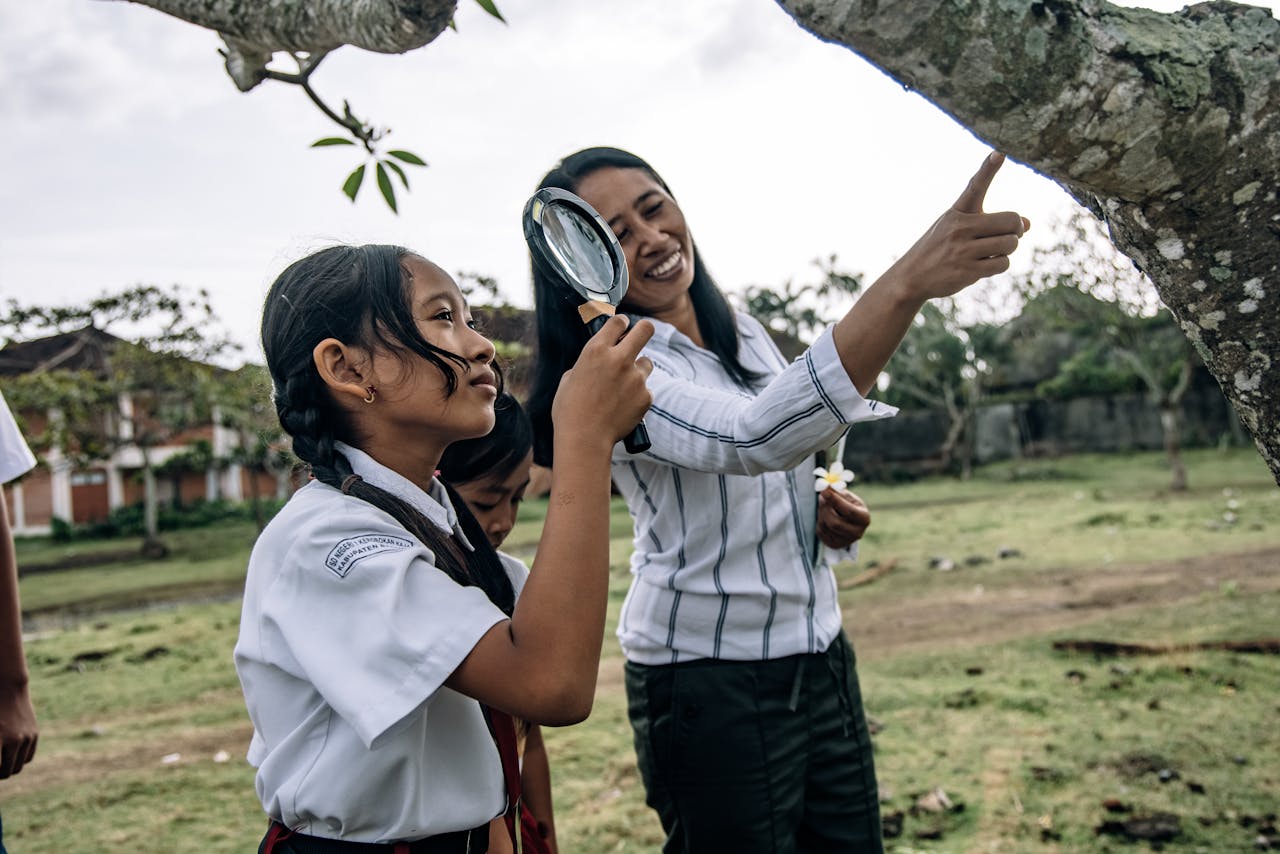
Many children are curious natural problem-solvers who ask thoughtful questions and enjoy learning.
But simply meeting academic expectations does not always mean students are developing the thinking habits that sustain learning over time. Planning, reflecting, making connections, and adapting when challenges become more complex are part of learning how to learn. These skills must be intentionally cultivated and strengthened.
In a world where computers and AI can recall information instantly, it’s no longer enough to memorize facts. Students need to know how to think through academic challenges, not just what to remember. That’s why learning to learn builds the strongest students and is at the heart of the IB Primary Years Programme (PYP) at AcadeCap.
AcadeCap Learning Strategies that Help Build Strong Students
How the PYP Began: Student-Centered by Design, Global by Nature
The PYP programme grew from a grassroots initiative called the International Schools Curriculum Project (ISCP). Throughout the 1990s, international school teachers and leaders collaborated to design a concept-driven, inquiry-based curriculum focused on how children learn, not just what they learn.
These educators recognized that traditional curricula were not preparing students for a rapidly changing world. Their goal was simple: help children develop the skills they would need to succeed, not just in school, but in life.
As the approach gained momentum and demonstrated its value across international contexts, the International Baccalaureate adopted the project and formally launched the Primary Years Programme. The result was a concept-driven, inquiry-based approach that placed students at the center of the learning process.
Why the PYP Works
The PYP is not just a curriculum, it’s an approach grounded in neuroscience research and best practices in education. Instead of memorizing isolated facts, students investigate big concepts that remain relevant throughout life.
For example, before learning about dinosaurs, children explore the concept of extinction. Knowledge about dinosaurs may change, but the concept itself does not. This approach allows students to pursue background knowledge according to their curiosity and ability, allowing students to practice learning skills that are challenging, meaningful, and engaging.
Learning to Learn = Academic Success
Many parents ask: “But what about grades?”
The answer is simple: when students learn how to learn, improved study skills and strong academic results naturally follow. Inquiry and project-based learning help students:
- Analyze, question, and research effectively
- Organize their thinking and communicate clearly
- Collaborate with peers purposefully
- Reflect on their own progress
These aren’t just “soft skills.” They are the foundation for lasting academic achievement, giving children the confidence and ability to master any subject.
Why AcadeCap is the Ideal PYP Environment
At Académie de la Capitale, we bring the PYP learning process to life:
- Small class sizes for individualized attention
- Multi-age learning to foster mentorship, leadership, and collaboration
- Open, flexible classroom culture that mirror real-world environments
- Teachers who are experts in their fields and in IB approach
- Differentiation to meet each child’s unique needs and learning styles
- Ample green space to support well-being, inquiry, and exploration
Our teachers intentionally connect research, neuroscience, and practice to encourage student learning in a meaningful way.
Preparing Life Long Learners
The PYP is conceptual, transdisciplinary, and spiral. Students revisit big ideas at increasing levels of complexity, building mastery rather than memorization. They learn across subjects, make real-world connections, and tackle authentic challenges.
Confident thinkers + capable problem-solvers = naturally higher academic achievement and lifelong learning.
At AcadeCap, learning to learn comes first. When children learn well, they gain a growth mindset that allows them to become more capable students, both now and in the future. That is why the IB PYP remains the cornerstone of our IB Primary Years Programme and the best preparation for students to thrive in a rapidly changing world.