
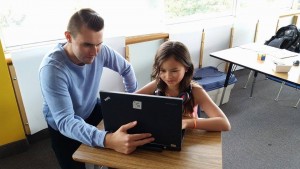
Week 6 (August 4th-7th, 2015): App Building
Welcome to the AcadeCoders App Building Blog! This blog will display all of the AcadeCoders hard work in building apps and games via JavaScript throughout the entire week; complemented with an array of photos and descriptions. Various trending apps and games are designed by using JavaScript and the AcadeCoders get

Week 5 (July 27th- July 31st, 2015): MinecraftEDU Viking Theme
Day 1 (July 27th, 2015) The basis of this week’s theme is to introduce campers to Viking themes and challenges. The campers are being split into two teams where they will face various challenges and games to build the best possible Viking Empire before they raid each other! After the
Now Offering Summer Courses!
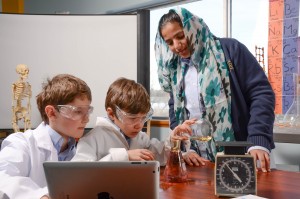
Summer credit courses can make it possible for all learners to achieve their individual potential! Académie de la Capitale’s summer credit courses apply the expertise, principles, and rigour of Académie de la Capitale’s day-school programme to accelerated credit programmes. Our tutors are highly specialized educators that offer individualised tutoring for
Week 4: HTML/CSS
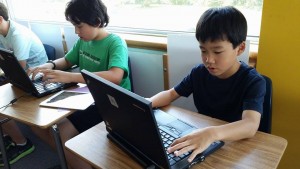
This week, the AcadeCoders learn the wonderful coding language of HTML/CSS! HTML/CSS is the standard markup language used to create web pages. It is written in the form of HTML elements consisting of tags enclosed in angle brackets (like <html>). HTML tags most commonly come in pairs like <h1> and</h1>,
Week 3 (July 13th-17th, 2015): JavaScript
This week, the AcadeCoders learn the wonderful coding language of JavaScript! JavaScript is a dynamic programming language. It is most commonly used as part of web browsers, whose implementations allow client-side scripts to interact with the user control the browser, communicate asynchronously, and alter the document content that is displayed.

Week 2 (July 6th-10th, 2015): Python
This week, the AcadeCoders learn the wonderful coding language of python! Python’s design philosophy emphasizes code readability, and its syntax allows the campers to express concepts in fewer lines of code than would be possible in languages such as C ++ or Java. This week, campers will learn an introductory
Last week of school
This past week was the last week of school! We wrapped up the unit about Reproduction, and did some fun, end of year activities. One of the last activities that the students completed had to do with oviparous, viviparous and ovoviviparous animals. The students compared the three different types of
SMILE Literacy Program – Writing Samples
Our SMILE students receive extra support to hone their reading and writing skills. Some students finish the foundations program but still require extra writing practice. For example, one student, who needed extra practice and support with their writing style, worked during 1:1 sessions with the teacher to read source passages
The AcadeCap TED-Ed Student Talks Program
Our Grade 6, 8, and 10 students were tasked with developing a Ted style talk as part of the TED-Ed Student Talks Program. Despite some setbacks this semester, we persevered and even switched to a virtual meeting format during the stay-at-home period. By the end of the semester, students had
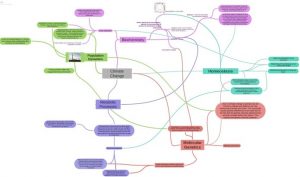
Our biology students are passionate about climate change!
The Grade 12 biology class took a deep dive into a real-world application of their unit concepts. This concept map was the result of one student’s literature review of recent scientific research being done to understand the inter-relationships between climate change and biological systems, processes, and populations. Source:: PSSP &
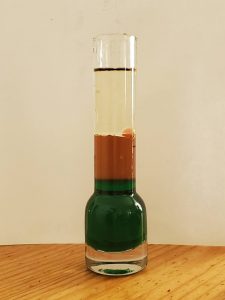
Oil floats on water
We Know that oil floats on water, but where do other liquids fit in? Students find out when they conduct this colorful density experiment that has them layer different substances, making a rainbow.#science #pssp #ibworldschool Source:: PSSP & OSSD
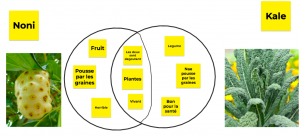
Plant Reproduction
The last unit of the year was focusing on plant, insect, and animal reproduction. To begin the unit, the Grade 6s studied plant reproduction. As one of the starting activities, they chose one plant that reproduces sexually, and one plant that reproduces asexually. They then found the differences and similarities