

How to Teach Math Effectively with Conceptual Understanding: AcadeCap’s Continuum Approach
Mathematics at AcadeCap can be broadly divided into three approaches to math instruction. In the International Baccalaureate Primary Years Programme (IB PYP), mathematics is taught using a conceptual, often visual representations and tactile approach. In Grade 7 and 8 or Pre-Secondary School Programme (PSSP), mathematics is taught using a contextual,

Curious how micro-schools are shaping the future of education?
Ottawa’s Premier Micro-School: How Académie de la Capitale Leads the Shift to Personalized, Purposeful Education At Académie de la Capitale, our journey has always been driven by a simple but powerful belief: education works best when it’s tailored to each learner’s unique strengths, challenges, and interests. We have always prioritized

Hackathon 2024
Dive into the Future of Innovation with Acadecap’s Inaugural Hackathon! Calling all aspiring innovators, coders, and problem-solvers! Acadecap Private School is thrilled to announce its first-ever Hackathon event, where creativity meets technology in an electrifying atmosphere of collaboration and innovation. Join us for a thrilling journey into the world of
Night of Theatre May 7, 2024
AcadeCap presents: Matinée of Theatre : Two epic shows – The Rainbow Fish and The Epic of Gilgamesh Please join us for an afternoon of theatre on Tuesday, May 7, 2024! Shows start : at 3:00 pm Admission is $5 dollars and there will be cupcakes after the performance. Summer

Exciting News: Summer Camp Registration Now Open!
Are you ready for a summer of discovery and creativity? We’re thrilled to announce that registration is officially open for our iSTEAM and Coding Summer Camps! Why Choose Our Camps? AcadeCamp and AcadeCoders camps are crafted to spark curiosity, ignite imaginations, and cultivate a love for learning in young minds.

OPEN HOUSE APRIL 13, 2024
Join us at our Open House event and explore the opportunities for your child’s education. We are thrilled to introduce our new waitlist for the highly sought-after English IB Primary Years Programme (PYP). The English PYP will join our current programmes: Bilingual IB PYP Programme JK to Grade 6 PSSP
Last week of school
This past week was the last week of school! We wrapped up the unit about Reproduction, and did some fun, end of year activities. One of the last activities that the students completed had to do with oviparous, viviparous and ovoviviparous animals. The students compared the three different types of
SMILE Literacy Program – Writing Samples
Our SMILE students receive extra support to hone their reading and writing skills. Some students finish the foundations program but still require extra writing practice. For example, one student, who needed extra practice and support with their writing style, worked during 1:1 sessions with the teacher to read source passages
The AcadeCap TED-Ed Student Talks Program
Our Grade 6, 8, and 10 students were tasked with developing a Ted style talk as part of the TED-Ed Student Talks Program. Despite some setbacks this semester, we persevered and even switched to a virtual meeting format during the stay-at-home period. By the end of the semester, students had
Our biology students are passionate about climate change!
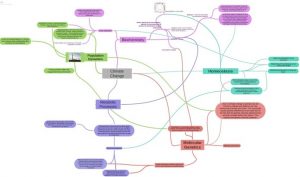
The Grade 12 biology class took a deep dive into a real-world application of their unit concepts. This concept map was the result of one student’s literature review of recent scientific research being done to understand the inter-relationships between climate change and biological systems, processes, and populations. Source:: PSSP &
Oil floats on water
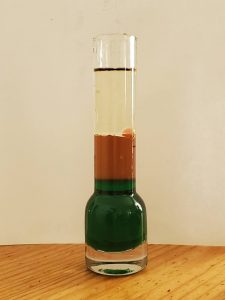
We Know that oil floats on water, but where do other liquids fit in? Students find out when they conduct this colorful density experiment that has them layer different substances, making a rainbow.#science #pssp #ibworldschool Source:: PSSP & OSSD
Plant Reproduction
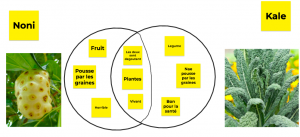
The last unit of the year was focusing on plant, insect, and animal reproduction. To begin the unit, the Grade 6s studied plant reproduction. As one of the starting activities, they chose one plant that reproduces sexually, and one plant that reproduces asexually. They then found the differences and similarities