
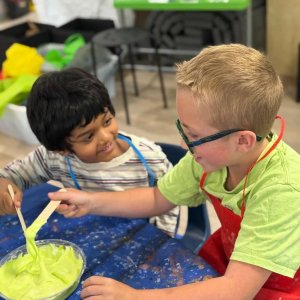
Blast Off into Space & Tech: Why AcadeCamp & AcadeCoders are the Ultimate Summer Destinations This Year
As the school year winds down, parents everywhere face the same annual puzzle: how do you find a summer camp that keeps your child’s brain active without burning them out? You want them to learn, but you also want them to run around outside, make friends, and just enjoy being

Friendships in Small Canadian Schools: The Benefits of Multi-Age Classrooms
Why Small Schools Support Strong Friendships in Canada One of the most common questions Canadian families ask about small schools is whether children will have enough opportunities to form strong friendships. Research confirms that children’s social development does not depend on large class sizes or numbers of peers. Instead, friendships

Why Learning to Learn Builds the Strongest Students
Many children are curious natural problem-solvers who ask thoughtful questions and enjoy learning. But simply meeting academic expectations does not always mean students are developing the thinking habits that sustain learning over time. Planning, reflecting, making connections, and adapting when challenges become more complex are part of learning how to

Advantages of Learning Multiple Languages at AcadeCap: A Global Benefit for Every Student
At École internationale Acadecap International School, there are many lifelong advantages of learning multiple languages. For over 20 years, we’ve helped students, including those with dyslexia and other learning differences, develop strong reading, writing, and communication skills in French, English, and Spanish. As the only Canadian school in the LabelFrancÉducation

Teaching Excellence at AcadeCap: A Blend of Expertise, International Standards, and Lifelong Learning
At AcadeCap International School, we believe that exceptional academics and education begins with exceptional educators. While Ontario private schools are not required to employ teachers certified by the Ontario College of Teachers (OCT) or individuals with teaching degrees, we take a different approach, one that exceeds the minimum requirements and

AI in Education – Benefits and Challenges for Meaningful Learning Experiences
The future of education and student engagement must blend innovation with a deeply human approach. AI is transforming classrooms around the world, offering new ways to support student learning and expand the possibilities of personalized education. According to recent research, 80% of students aged 13 to 18 already use AI

Observation Using Biological Drawings
Biological drawings are used to communicate microscopic and macroscopic observations. Biology 11 students use a checklist to ensure that their drawings are accurate, clear, well labelled, and easy to understand. Drawings must be proportional and include magnification and scale.Here is an example that was drawn during our recent Protist Lab.

Creative Pumpkin Painting
This morning, in our kindergarten classroom, we were busy designing and painting our Halloween pumpkins. Sensory play helps children to develop cognitively, allowing for their creative confidence to flourish. We had so much fun! Source:: Kinder Blog

Amazing Pattern Blocks
During our math class, we explored our amazing pattern blocks. We talked about the varying shapes and their individual characteristics. We took inspiration from a picture of a pumpkin and designed our own jack-o-lanterns, using the pattern blocks for the facial features. Source:: Kinder Blog

Language Learning and Play
As part of our language learning, Grade 1/2 students use the Daily 5 program each day in centres. Every day, we focus on a different language skill, such as: listening to reading, reading to self or with a friend, working on writing, fine motor skills, and playing with words. Students

Colourful Fall
Our Kindergarten class has been keenly researching characteristics of fall.How do we know it is fall? What does it look like, feel like, sound like and smell like?A popular indicator of Fall in our classroom, was the presence of colour leaves.Here is a collection of beautiful interpretations of Fall from

French verbs
During French class, the 5/6 students were learning and reviewing verbs. The students had the choice to write sentences using the different verbs, quiz each other about the different verb tenses, or create a song with the different verbs. Many of the students chose to make a song, enthusiastically and