
Virtual AcadeCamp: Registration is Open!
It’s a go! Virtual AcadeCamp is ready and open for registrations. This summer, AcadeCamp will look different than past summers. We will be doing our learning over Google Meet, and have a 9:00am to 2:00pm schedule. Campers will have snack breaks, as well as body breaks between activities. Moreso,
L’exposition PP 2020 / PYP Exhibition 2020: VIRTUAL
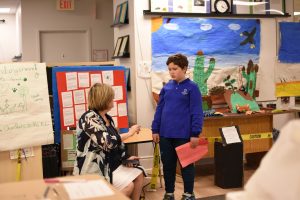
English version to follow. L’exposition PP 2020, Académie de la Capitale : un projet qui encourage une recherche collective et approfondie. En dernière année du programme primaire, les élèves participent à un projet de fin d’études : l’exposition. C’est à la fois une recherche menée dans l’esprit d’une responsabilité personnelle
Home Learning iSTEAM Challenge: Week 3
On December 17, 1903, in North Carolina, Orville and Wilbur Wright made the first successful flight in history of a self-propelled, heavier-than-air aircraft. Orville piloted the gasoline-powered, propeller-driven biplane, which stayed aloft for 12 seconds and covered 120 feet on its inaugural flight. (Source: https://www.history.com/this-day-in-history/first-airplane-flies) This week, the iSTEAM Team challenges you to
Student-Led Conferences from home
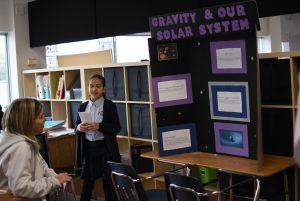
Student-Led Conference Day is scheduled on Wednesday, May 27, 2020. On this day, we encourage students to proudly show their parents the work accomplished during the school year. Students always have access to their portfolio. For AcadeCap students, grade 3 and up, they are encouraged to show their growth and
AWARDS CEREMONY / SOIRÉE DES PRIX D’EXCELLENCE
Our first annual Prix d’excellence de l’Académie de la Capitale Awards presentation took place on May 29th, 2015. Since then we have held the gala event every May and this year will be no exception, although the format will be different. The awards were conceived as a celebration across the
Home Learning iSTEAM Challenge: Week 2
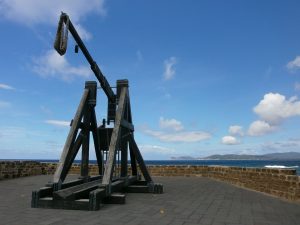
Did you know that the catapult was invented in about 400 BC? The catapult has many variations, but mainly it uses the sudden release of stored potential energy to propel an object. This week, the iSTEAM team challenges you to build a catapult and see how far you can launch a

Attack! Catapults and Trebuchets
To conclude the Eras unit, the students were challenged in building their own catapults or trebuchets. With one weekend to research ideas, collect materials and build they were highly motivated. They came up with some awesome machines! Through such activity they learned how the end of the Medieval Era came

The Art Of Curling
The kindergarten class, along with the grade 1/2’s, had the awesome privledge to be part of an interactive experience with a paralympian this morning. We learned all about the sport of curling. It was such a great experience for the children to meet such inspirational individuals. Source:: Kinder Blog

What is a Map- Creating a Fantasy World
Students have been exploring maps and their features. Using fantasy mentor texts such as; ” Wings of Fire,” ” Narnia,” ” Eargon,” and ” How to Train Your Dragon,” students determined how the maps can create a new world and help the readers understand the story. Students then created their

Exploring Global Issues
As a final Civics assignment, and an example of a collaboration with Science, students engaged in a model UN roleplay where they each became delegates on the UN Environmental Assembly, a UN committee meeting to discuss global issues related to the environment. Each student researched the topic of pharmaceutical pollution,

Snow, Snow And More Snow!
The children at Acadecap have been enjoying all of the snow that we have received in our area.They decided to challenge themselves and build an igloo.Building an igloo teaches the children to explore their ideas, test them, evaluate them and problem solve. They also learned to cooperate with their peers

Welcome to the GLOBE Community!
GLOBE is an international science and education programme where students assist scientists from across the globe to understand, sustain, and improve the environment at local, regional, and global scales. GLOBE stands for ‘Global Learning and Observations to Benefit the Environment.’ For our first project, ‘Mission SnowGLOBE,’ the OSSD students are